
2026.01.15
- SLOW

- 1월 15일
- 7분 분량
Oil Prices Reverse After Iran Fears Ease, Rising U.S. Stocks and Venezuela Exports Weigh
Oil prices initially settled higher on Wednesday on fears of possible Iranian supply disruptions, but later reversed gains after U.S. President Donald Trump said violence in Iran’s crackdown on protests was subsiding, easing concerns of a near-term conflict. Brent ended down 92 cents at $64.55 a barrel, while WTI fell 96 cents to $60.19, after earlier settling at $66.52 and $62.02 respectively. Sentiment weakened further as U.S. data showed crude inventories rose by 3.4 million barrels to 422.4 million barrels and gasoline stocks jumped by 9 million barrels, far above expectations. Additional pressure came from Venezuela resuming exports, with two supertankers carrying about 1.8 million barrels each departing as part of a potential 50 million-barrel supply deal with the U.S. While geopolitical tensions with Iran remain elevated, analysts noted actual oil production there has so far been unaffected, limiting the supply impact.

___________________________________
OPEC Projects Steady Oil Demand Growth Through 2027
OPEC forecast that global oil demand will increase by 1.34 million bpd in 2027, broadly in line with the 1.38 million bpd growth expected in 2026, marking its first outlook for 2027. The group also indicated that the oil market in 2026 will be close to balance, assuming OPEC+ output remains near current levels. OPEC+ produced 42.83 million bpd in December 2025, about 170,000 bpd below projected 2026 demand for its crude, suggesting limited oversupply. This view contrasts sharply with other forecasts that see a potential surplus of nearly 3.8 million bpd this year. OPEC maintains that economic growth will stay strong in 2026–2027 and that the transition away from oil will proceed more slowly than many expect.

___________________________________
European Oil Prices Jump as Kazakh Supply Cuts Tighten Market
Europe’s oil market has strengthened sharply despite a global surplus, driven mainly by a steep drop in Kazakhstan’s CPC Blend exports alongside disruptions in Libya and the North Sea. Reduced availability of light, low-sulfur crude has pushed physical prices higher, with WTI Midland and Azeri Light trading at their strongest levels in over a year. Kazakh loadings this month are nearly half below initial plans, tightening supply in regions closely tied to Brent pricing and widening key spreads such as Brent-Dubai. The imbalance highlights continued tightness in sweet crude in Europe even as heavier grades remain oversupplied globally. The strength may ease if weather improves and Kazakh exports return closer to normal levels in coming weeks.

___________________________________
Chevron Poised for Expanded U.S. License to Ramp Up Venezuela Oil Exports
Chevron is expected to receive an expanded U.S. license this week that could allow higher oil production and exports from Venezuela following the removal of President Nicolás Maduro, according to industry sources. The company currently produces about 240,000 bpd through joint ventures with PDVSA, but prior license restrictions had cut exports roughly in half compared with early 2025 levels. Other firms, including Marathon Petroleum, Valero, Mercuria and Glencore, are also seeking U.S. approval to access Venezuelan heavy crude, while the U.S. has already completed initial oil sales under a $2 billion deal. An expanded license could allow Chevron not only to export more crude to its own refineries but also to trade some PDVSA production. Chevron’s shares have climbed nearly 9% since the political shift in Venezuela, reflecting expectations of increased output and exports.

___________________________________
US Blockade Slashes Venezuelan Oil Flows to China, Forcing Refiners to Seek Alternatives
China’s oil imports from Venezuela are set to fall sharply from February as a U.S. naval blockade and vessel seizures drastically reduce tanker departures, following Washington’s claim of control over Venezuela’s oil sector. Only about 5 million barrels (around 166,000 bpd) of Venezuelan crude and fuel oil are now expected to reach China, down from an average of 642,000 bpd in 2025, when China absorbed 75% of Venezuela’s exports. Since December, just 2.9 million barrels of crude and 2.6 million barrels of fuel oil have slipped through the blockade, after many tankers turned back to avoid seizure. China’s immediate impact is cushioned by heavy stockpiling, with 43–52 million barrels still in transit and record imports of 660,000 bpd in November before falling to ~450,000 bpd in December. The biggest hit will be felt by China’s independent “teapot” refiners, which may turn to alternatives like Canadian Cold Lake and Access Western Blend crude as Venezuelan oil is increasingly diverted to the United States.

___________________________________
China’s Crude Oil Imports Hit Record Highs in 2025 on Stockpiling and Low Prices
China’s crude oil imports surged to record levels in December and for full-year 2025, with December inflows rising 17% year-on-year to 55.97 million tons, or 13.18 million bpd, according to customs data. Total 2025 crude imports reached 557.73 million tons (11.55 million bpd), up 4.4% from the previous year, driven by stronger refinery throughput and aggressive stockpiling. Consultancies estimate China’s oil throughput averaged 15.38 million bpd in 2025, while average stock builds jumped to 430,000 bpd, supported by new storage capacity and lower oil prices about $10 per barrel cheaper than in 2024. Onshore crude inventories rose by around 35 million barrels in December, reaching a record 1.206 billion barrels, with major builds in Guangdong and Shandong provinces. Meanwhile, Iranian crude imports fell below 1.3 million bpd in December as increased Russian supplies displaced some barrels, while natural gas imports rose 16.3% year-on-year in December despite lower full-year gas imports.
![[SLOW] https://slowspace.io/ Analytics Trade Flow _ China seaborne crude oil imports by origin countries](https://static.wixstatic.com/media/e9c525_453db39411c74654bb5998d7ee142539~mv2.png/v1/fill/w_980,h_645,al_c,q_90,usm_0.66_1.00_0.01,enc_avif,quality_auto/e9c525_453db39411c74654bb5998d7ee142539~mv2.png)
___________________________________
US Extends Deadline for Negotiations on Lukoil’s Overseas Assets to Feb. 28
The U.S. Treasury has extended until February 28 a license allowing companies to hold talks with Russia’s Lukoil over the potential purchase of its foreign assets. Lukoil put the assets up for sale after President Donald Trump imposed sanctions on the company and Rosneft in October as part of efforts to pressure Russia over the Ukraine war. The assets, estimated to be worth around $22 billion, include oil fields, refineries, and retail fuel networks and have attracted interest from U.S. private equity and major oil firms. The license extension also permits contingent contracts and preparatory wind-down work, marking the second extension after an initial delay in December. Any final transaction would still require U.S. Treasury approval, as sanctions have significantly disrupted Lukoil’s overseas operations.

___________________________________
Indian Oil Secures First Ecuadorean Crude Cargo as Russian Supplies Face Disruption
Indian Oil Corp (IOC) purchased its first-ever cargo of Ecuadorean Oriente crude, buying 2 million barrels for end-March delivery via a tender, according to trade sources. The move comes as U.S. and EU sanctions disrupt Russian oil supplies, prompting Indian refiners to diversify sourcing. IOC has traditionally relied heavily on Russian and Middle Eastern crude and rarely buys South American grades despite having optional contracts with regional suppliers. Reducing Russian oil intake could also strengthen India’s trade negotiations with the United States. Last month, IOC similarly bought 2 million barrels of Colombia’s Castilla crude, underscoring its broader diversification strategy.
![[SLOW] https://slowspace.io/ Flow Esmeraldas Oil Export Terminal, Ecuador](https://static.wixstatic.com/media/e9c525_d0b6c1404d3e4617ad502519b13531f3~mv2.png/v1/fill/w_980,h_413,al_c,q_90,usm_0.66_1.00_0.01,enc_avif,quality_auto/e9c525_d0b6c1404d3e4617ad502519b13531f3~mv2.png)
___________________________________
BP Signals $4–$5 Billion Write-Down as It Retreats from Low-Carbon Push
BP expects to book $4–$5 billion in fourth-quarter impairments, mainly linked to its low-carbon energy businesses, as it pivots capital back toward oil and gas under new leadership. The charges follow years of heavy write-downs, including $5.7 billion in 2023, $5.1 billion in 2024, and about $6.9 billion flagged for last year, on top of a $24 billion hit from exiting Russia in 2022. BP has sharply cut annual spending on energy transition projects from $7 billion to a maximum of $2 billion, while exiting or scaling back solar, wind, biofuels and hydrogen investments. Weaker commodity prices are also weighing on results, with lower oil prices expected to reduce quarterly earnings by $200–$400 million and gas prices by another $100–$300 million, as Brent averaged $63.73 per barrel in the quarter. Despite the headwinds, BP expects net debt to fall to $22–$23 billion by end-2025, down from $26.1 billion, supported by about $5.3 billion in divestments.

___________________________________
VLCC Spot Rates Surge Above $100,000 as Geopolitical Risks Fuel Rally
VLCC spot rates jumped sharply above $100,000 per day, driven by strong fixtures from Frontline and DHT Holdings and heightened geopolitical tensions. Trafigura fixed DHT Opal for a Middle East–China voyage at nearly $122,000 per day, while Frontline’s Front Orkla earned an implied $184,000 per day on a U.S. Gulf–West Africa run. These levels mark a dramatic rise from rates below $70,000 earlier in the week and under $40,000 in early January. Brokers say sentiment has strengthened rapidly amid U.S. actions involving Venezuela, potential risks around Iran, active buying and chartering by Korean owners, and speculative positioning, pushing the VLCC market from weakness into a strong rally.
![[SLOW] Daily VLCC Index](https://static.wixstatic.com/media/e9c525_90ee11f0f81a45838c957688b5458fe7~mv2.png/v1/fill/w_980,h_768,al_c,q_90,usm_0.66_1.00_0.01,enc_avif,quality_auto/e9c525_90ee11f0f81a45838c957688b5458fe7~mv2.png)
___________________________________
Baltic Exchange Launches New Short-Haul Tanker Benchmarks for Northern Europe
The Baltic Exchange has introduced four new Baltic Intermediate Tanker Indices (BITI) to benchmark short-haul tanker rates in north-west Europe, responding to growing regional trade activity. The weekly indices cover routes TC25, TC26, TD30 and TD31, reflecting core short-range movements of 12,500–15,000-tonne dirty, clean and naphtha cargoes between ports such as Amsterdam, Rotterdam, Antwerp, London and Immingham. Development began in August with input from major shipbrokers, including BRS, Fearnleys and EA Gibson, to ensure robustness and market relevance. Around 200 spot fixtures occur monthly in this sector, providing a strong data base for assessments. The Baltic Exchange said the new benchmarks aim to improve transparency, risk management and decision-making in an under-reported but highly active tanker market.

___________________________________
Sinokor Buying Spree Threatens to Shrink Tankers International VLCC Pool
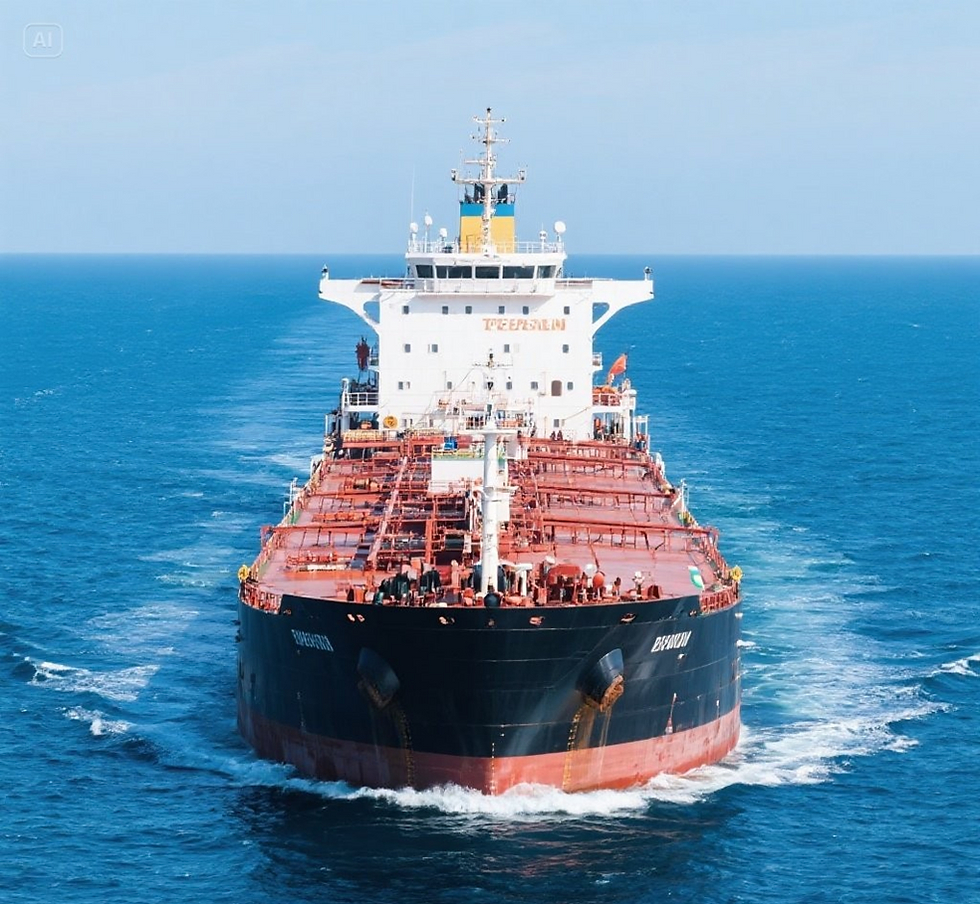
Tankers International (TI) is set to lose up to seven VLCCs from its pool following Sinokor Maritime’s aggressive acquisition of secondhand tankers, including vessels sold by CMB.Tech and International Seaways. Most of the VLCCs reportedly sold to Sinokor are currently listed in TI’s pool, including several scrubber-fitted ships, though one vessel may have gone to another buyer. Sinokor has surprised the market by purchasing more than 30 older VLCCs over the holiday period, positioning itself to control a fleet exceeding 100 vessels when combined with existing ships and charters. TI declined to comment on potential losses, but its VLCC pool count already appears to have edged lower from the 29 vessels reported last September.
___________________________________
Asyad Shipping Orders Three Dual-Fuel-Ready VLCCs in $389m Hanwha Ocean Deal
Oman’s Asyad Shipping has placed an order for three 300,000-dwt VLCC newbuildings at South Korea’s Hanwha Ocean for about $388.5m, or roughly $129.5m per vessel. The dual-fuel-ready tankers will feature high-end specifications including scrubbers and shaft generators to improve fuel efficiency, with delivery scheduled for 2028–2029. The deal comes as VLCC ordering remains relatively low compared with the global fleet and marks Asyad’s return to Hanwha Ocean, where it already has four VLCCs under construction for 2026 delivery. The order forms part of Asyad’s broader fleet renewal strategy, following the recent sale of four ageing LNG carriers and ongoing efforts to modernise its diversified fleet.


댓글