
2026.02.26
- 2월 26일
- 6분 분량
Oil Settles Little Changed as Iran Tensions Counter Large U.S. Crude Build
Oil prices ended nearly flat Wednesday as geopolitical risks tied to Iran outweighed a sharply bearish U.S. inventory report. Brent rose 8 cents to $70.85 a barrel, while WTI fell 21 cents to $65.42. The U.S. EIA reported a 16 million-barrel surge in crude stocks last week, far exceeding expectations, but the impact on prices was limited. Markets remained focused on the possibility that U.S. action against Iran could disrupt Middle East supply after President Donald Trump reiterated his hardline stance on Tehran. Meanwhile, OPEC+ is expected to consider a modest output increase for April.
![[SLOW] Oil Market Benchmarks WTI, Oman, and Brent](https://static.wixstatic.com/media/e9c525_c3b558ac5d8f4c62a041b6c851e523d1~mv2.png/v1/fill/w_980,h_957,al_c,q_90,usm_0.66_1.00_0.01,enc_avif,quality_auto/e9c525_c3b558ac5d8f4c62a041b6c851e523d1~mv2.png)
___________________________________
OPEC+ Eyes 137,000 bpd Output Hike for April as Brent Nears $72.50
OPEC+ is expected to consider increasing oil output by 137,000 bpd for April when eight key members meet on March 1, sources said. The potential hike — matching increases agreed for October through December last year — would follow a three-month pause and help Saudi Arabia and the UAE regain market share amid sanctions on Russia and Iran. The group had already raised quotas by 2.9 million bpd from April to December 2025, about 3% of global demand, before freezing further increases through March 2026. Brent crude is trading near $71 per barrel, close to a seven-month high of $72.50, supported by U.S.–Iran tensions. OPEC+, which includes the OPEC and allies like Russia, accounts for roughly half of global oil supply.

___________________________________
Saudi Arabia and Iran Ramp Up Oil Exports Amid Rising Middle East Tensions
Saudi Arabia and Iran are accelerating crude exports as U.S. military deployments heighten uncertainty over future supply through the Strait of Hormuz. Saudi shipments are averaging about 7.3 million bpd in February, the highest since April 2023, while Iran has sharply increased loadings from Kharg Island, moving more than 20 million barrels in five days — nearly triple January’s pace for the same period. Combined exports from Iraq, Kuwait and the UAE have also climbed by roughly 600,000 bpd from January levels. The surge echoes past pre-conflict patterns, with Tehran rushing barrels to market ahead of potential disruption, while rising regional flows and tanker demand have pushed supertanker earnings to multi-year highs.
![[SLOW] https://slowspace.io/ Flow NIOC Kharg Island Terminal, Iran](https://static.wixstatic.com/media/e9c525_797ffc3255dd43129918d457305539e1~mv2.png/v1/fill/w_980,h_739,al_c,q_90,usm_0.66_1.00_0.01,enc_avif,quality_auto/e9c525_797ffc3255dd43129918d457305539e1~mv2.png)
___________________________________
US Imposes New Sanctions on Iran’s Missile Program and Shadow Fleet
The Trump administration imposed fresh sanctions on more than 30 entities and individuals linked to Iran’s oil trade and weapons programs, intensifying pressure on Tehran amid ongoing nuclear talks. The measures, announced by the U.S. Department of the Treasury and its OFAC, target networks across Iran, Turkey and the UAE involved in ballistic missile development, conventional arms procurement and the operation of Iran’s so-called shadow oil fleet. President Donald Trump said Iran was attempting to rebuild its nuclear program despite past U.S. strikes, while negotiations continue in Geneva with U.S. envoy Steve Witkoff and Jared Kushner expected to attend.

___________________________________
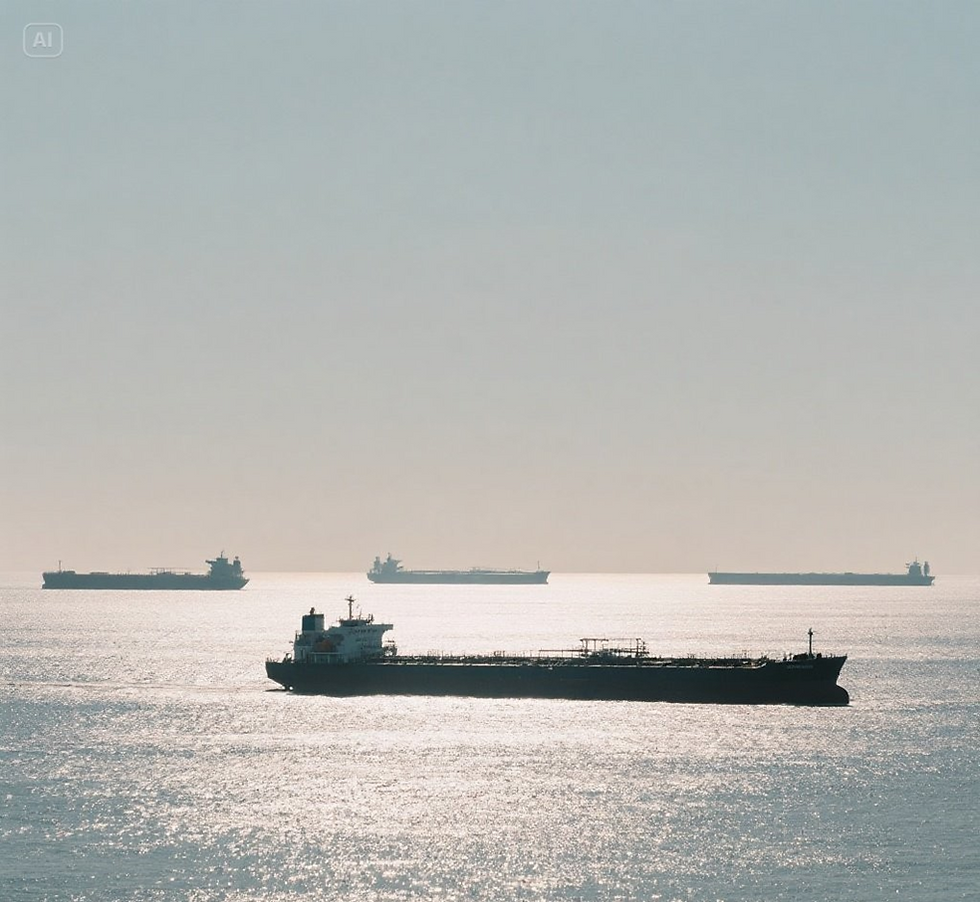
Russia and Iran Cut Oil Prices to China as Unsold Barrels Build at Sea
Russia and Iran are deepening crude discounts to compete for Chinese buyers after India sharply reduced Russian purchases, triggering a price war in Asia. Russia’s Urals crude is trading at about $12 below Brent, while Iranian Light is offered at discounts of up to $11, as displaced cargoes flood eastward and overwhelm China’s independent “teapot” refiners. With limited capacity to absorb additional supply, unsold oil is piling up at sea — with roughly 48 million barrels of Iranian crude and about 9.5 million barrels of Russian oil floating in Asian waters. The buildup underscores mounting pressure on both exporters, as Moscow curbs output and Tehran races to sell barrels amid heightened geopolitical risks.
___________________________________
North Sea Oil Weakens as Vitol and TotalEnergies Buying Spree Fades
North Sea crude markets are showing signs of softening after heavy prompt cargo purchases by Vitol and TotalEnergies tapered off, removing a key source of recent support. WTI Midland, one of the grades underpinning Dated Brent, fell to a two-month low premium of $1.70 a barrel, while Brent CFDs flipped into contango for the first time since November and the Brent DFL turned negative, signaling ample near-term supply. The pullback in buying coincides with Europe’s refinery maintenance season and expectations of rising Atlantic Basin supply, while high freight rates are limiting Asian demand. Geopolitical tensions between the U.S. and Iran remain a wildcard ahead of the Feb. 27 Brent contract expiry.

___________________________________
Tengiz Oil Output Recovery Slowed by CPC Loading Disruptions
Kazakhstan’s Tengiz oilfield is restoring production more slowly than planned due to bad weather and drone alerts disrupting tanker loadings at the Caspian Pipeline Consortium terminal near Novorossiysk. Output rose to 790,000 bpd but remains well below the 950,000 bpd target, as export bottlenecks have limited crude intake into the pipeline system that carries about 80% of Kazakhstan’s oil exports. The field, operated by Tengizchevroil and led by Chevron, has been ramping up after January power outages, but ongoing instability at the Black Sea terminal continues to constrain shipments and weigh on CPC Blend prices.
![[SLOW] https://slowspace.io/ Analytics Trade Flow _ CPC Marine Terminal seaborne crude oil exports by destination countries](https://static.wixstatic.com/media/e9c525_17ea2059c34148b3a002f3dcc5bbb4db~mv2.png/v1/fill/w_980,h_636,al_c,q_90,usm_0.66_1.00_0.01,enc_avif,quality_auto/e9c525_17ea2059c34148b3a002f3dcc5bbb4db~mv2.png)
___________________________________
Iraq’s West Qurna 2 Output Could Nearly Double as Chevron Enters Talks
Iraq could almost double production at the West Qurna 2 oilfield to 750,000–800,000 bpd if Chevron takes over operations from Russia’s Lukoil, Oil Minister Hayan Abdel-Ghani said. The U.S. major has secured exclusive negotiations to replace Lukoil, which declared force majeure after being hit by Western sanctions, and was removed as operator earlier this year. West Qurna 2 accounts for nearly 10% of Iraq’s output, and the move would support Baghdad’s goal of lifting production capacity above 6 million bpd by 2029. Iraq, OPEC+’s second-largest producer, has been offering improved terms to global energy firms including ExxonMobil, BP and TotalEnergies to expand output, while the potential deal with Chevron could also strengthen ties with Washington as efforts continue to isolate Moscow over the Ukraine war.
![[SLOW] https://slowspace.io/ Flow West Qurna 2, Iraq](https://static.wixstatic.com/media/e9c525_c30d3a70d6c14e43909bf2f45395485c~mv2.png/v1/fill/w_980,h_733,al_c,q_90,usm_0.66_1.00_0.01,enc_avif,quality_auto/e9c525_c30d3a70d6c14e43909bf2f45395485c~mv2.png)
___________________________________
Saipem Ready to Resume Venezuela Work After U.S. Sanctions Easing
Italian oil contractor Saipem said it is ready to return to Venezuela’s oil sector after the United States eased sanctions on the country’s energy industry, CEO Alessandro Puliti said, with potential contracts expected later this year. The U.S. Treasury’s OFAC issued two general licences allowing global energy companies like Chevron, BP, Eni, Shell and Repsol to operate in Venezuela and seek new investment opportunities. Puliti noted that while no tenders have yet been received, international and U.S. oil firms are evaluating plans, and Saipem expects demand to materialise later in the year.

___________________________________
Sinokor Buys Second AET VLCC for $86.5m in Ongoing Tanker Expansion
South Korea’s Sinokor Maritime has acquired the 311,900-dwt VLCC Eagle Vancouver (built 2013) from Singapore-based AET for $86.5 million, marking its second purchase from AET this month. The vessel, built by Hanwha Ocean (formerly DSME), was valued at $90.5 million days after the deal, highlighting firming prices for mid-aged VLCCs amid Sinokor’s aggressive buying spree. The company has expanded beyond AET tonnage, recently acquiring ships from Bahri, Wah Kwong Maritime Transport and CMB.Tech. According to VesselsValue data, Sinokor has purchased 46 VLCCs so far this year, underscoring the scale and speed of its crude tanker fleet expansion.

___________________________________
Economou VLCC Secures $262,000/Day as Tanker Rally Intensifies
A VLCC owned by George Economou’s TMS Tankers has been fixed at $262,000 per day for a Middle East–China voyage, marking one of the highest spot rates of the decade. The 296,800-dwt Solana (built 2010) was chartered by Shenghong Petrochemical International, with the premium rate partly reflecting its open position in India. Benchmark earnings from the Middle East to China have surged above $200,000 per day, more than doubling in a month, amid tight vessel supply and geopolitical tensions around the Strait of Hormuz. Recent fixtures by Bahri and others above $200,000 per day highlight the extraordinary rally, which analysts say is being driven more by risk sentiment and fleet concentration than by fundamental demand alone.
![[SLOW] Daily VLCC Index](https://static.wixstatic.com/media/e9c525_079e94f1bf5a412ca7483ed4cbe0362b~mv2.png/v1/fill/w_980,h_537,al_c,q_90,usm_0.66_1.00_0.01,enc_avif,quality_auto/e9c525_079e94f1bf5a412ca7483ed4cbe0362b~mv2.png)


댓글