
2026.02.20
- 2월 23일
- 3분 분량
Oil Hits Six-Month High as US-Iran Tensions Escalate
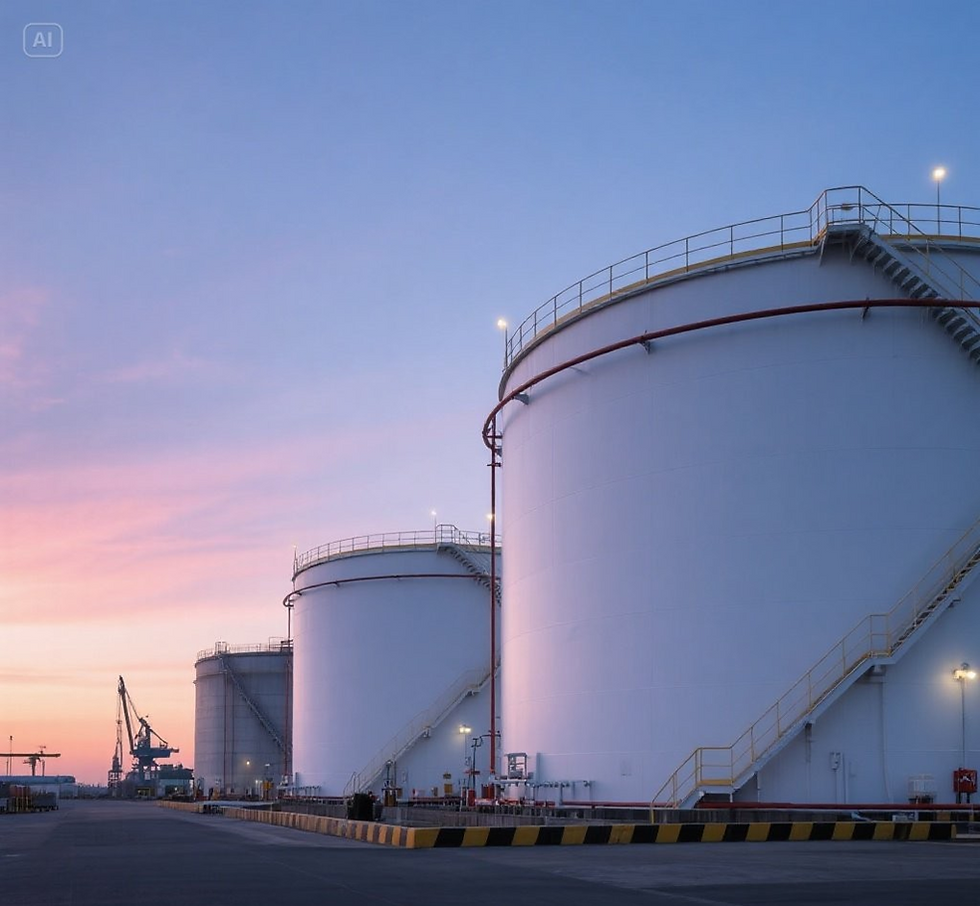
Brent crude settled at $71.66 a barrel and WTI at $66.43, both up about 2% and marking their highest closes in six months, as traders priced in rising geopolitical risk in the Middle East. Concerns intensified after Donald Trump warned Iran to reach a nuclear deal within days or face consequences, while Tehran signaled military drills and potential rocket launches and previously disrupted traffic near the Strait of Hormuz, through which roughly 20% of global oil flows. Additional support came from a sharp 9-million-barrel draw in US crude inventories and falling Saudi exports, reinforcing signs of tighter supply. Analysts said the market is rallying on expectations of possible US action against Iran, with solid demand and lower stockpiles underpinning prices.
___________________________________
Saudi Crude Exports Slip to Three-Month Low in December
Saudi Arabia’s crude exports fell to 6.99 million bpd in December, down from 7.38 million bpd in November and the lowest level since September, according to data from the Joint Organizations Data Initiative. Despite the drop in exports, crude production edged up to 10.08 million bpd — the highest since April 2023 — as more barrels were directed to domestic refining rather than overseas sales. Refinery throughput climbed nearly 7% month-on-month to 2.74 million bpd, while direct crude burning declined. The export decline comes as OPEC+ weighs a potential return to output increases from April, even as both OPEC and the IEA flag the risk of a global oil surplus and slower demand growth later this year.
![[SLOW] https://slowspace.io/ Analytics Trade Flow _ Saudi Arabia seaborne crude oil exports by destination countries](https://static.wixstatic.com/media/e9c525_db6cae45e6c443c0862dd3c1cc1cf404~mv2.png/v1/fill/w_980,h_618,al_c,q_90,usm_0.66_1.00_0.01,enc_avif,quality_auto/e9c525_db6cae45e6c443c0862dd3c1cc1cf404~mv2.png)
___________________________________
Russia’s Urals Crude Trades Just Above the EU’s New $44.10 Price Cap
Russia’s Urals crude has remained just above the European Union’s new $44.10 per barrel price cap since it took effect on February 1, according to LSEG data. The cap allows EU firms to provide shipping and insurance services only if Russian oil is sold below the set level. Prices at the Baltic port of Port of Primorsk have hovered slightly above the cap, with the latest assessment at $44.14 per barrel. Rising freight costs from winter weather and tighter sanctions — including shipments via Port of Ust-Luga — are pressuring prices and could push them back below the threshold.

___________________________________
IEA Fails to Reach Unified Statement as US Challenges Net Zero Agenda
The International Energy Agency concluded its Paris ministerial without a formal joint communique for the first time since 2017, exposing divisions between the US and European members over climate policy. US Energy Secretary Chris Wright, under President Donald Trump, rejected the net zero agenda as unrealistic, while most other ministers reaffirmed support for the energy transition and condemned Russia’s war in Ukraine. IEA chief Fatih Birol said the agency will expand its focus on energy security amid rising geopolitical risks.

___________________________________
Dynacom Sells 11 VLCCs to Sinokor as Korean Buyer Tightens Grip on Global Tanker Fleet
George Procopiou’s Dynacom Tankers has agreed to sell 11 VLCCs to South Korea’s Sinokor Maritime, confirming a revived deal after earlier talks reportedly fell through. While prices were not disclosed, market sources say the agreement was repriced higher amid rising tanker values. Sinokor has been on an aggressive buying spree, acquiring at least 52 VLCCs in recent months, including vessels from Frontline. The company now controls more than 140 VLCCs either owned or chartered, representing over 15% of the global fleet. Its rapid expansion is reportedly linked to cooperation with MSC Mediterranean Shipping Company co-owner Gianluigi Aponte.

___________________________________
Suezmaxes Gain Appeal as VLCC Freight Costs Climb
Charterers are increasingly finding it cheaper to use two Suezmax tanker voyages instead of a single VLCC because VLCC hire rates have climbed sharply, making supertankers expensive to book. A recent spot deal by Indian Oil Corporation showed one suezmax fixed at about $5.6 million, meaning two trips could still cost less than a single VLCC hire on the same route. VLCC rates have reached historically high levels on long-haul trades, squeezing charterers’ costs and pushing them toward mid-size tankers. Suezmax demand and activity have also been supported by shifting trade patterns, such as strong Atlantic and West Africa flows. As a result, mid-size vessels are gaining renewed attention in a tanker market dominated by expensive VLCC freight.
![[SLOW] Daily VLCC Index](https://static.wixstatic.com/media/e9c525_43e83e5b90274f508a96270566c90d94~mv2.png/v1/fill/w_980,h_1158,al_c,q_90,usm_0.66_1.00_0.01,enc_avif,quality_auto/e9c525_43e83e5b90274f508a96270566c90d94~mv2.png)


댓글